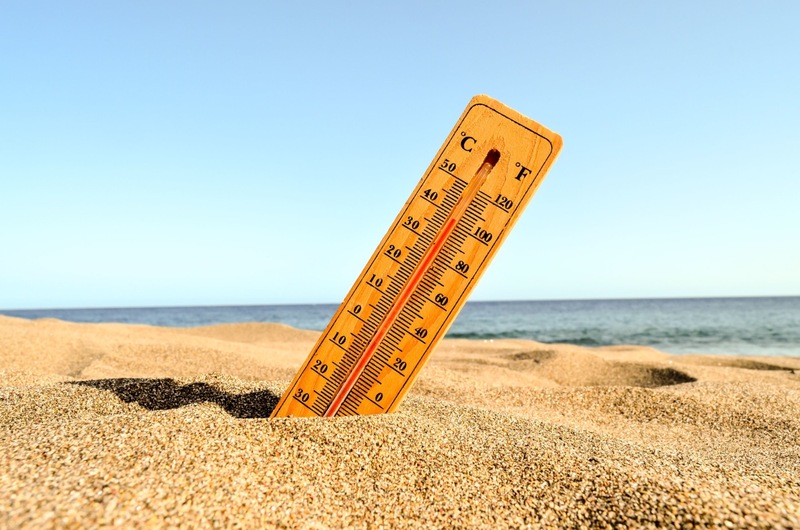
Plastic fasteners offer valuable advantages in applications where metal components may be too heavy, conductive, corrosive, or abrasive. However, not every plastic performs the same way when exposed to intense heat, freezing conditions, or repeated temperature changes.
Choosing the right fastener requires more than identifying the hottest or coldest temperature it may encounter. Our customers must also consider how long the fastener will remain at that temperature, the load it will carry, and the chemicals, moisture, vibration, or ultraviolet exposure present in the operating environment.
Start with the Complete Temperature Profile
The first step is understanding exactly what “extreme temperature” means for the application.
Consider these questions:
-
What are the minimum and maximum operating temperatures?
-
Is the exposure continuous or temporary?
-
Will the assembly repeatedly heat up and cool down?
-
Will the fastener be under load at the highest temperature?
-
Could the material encounter moisture, chemicals, fuels, or direct sunlight?
-
How much dimensional change can the assembly tolerate?
A brief temperature spike may affect a fastener differently than continuous exposure. Likewise, a material that performs well in steady heat may respond differently when subjected to hundreds of freeze-and-thaw or heating-and-cooling cycles.
High-Temperature Applications
Higher temperatures can reduce a plastic’s stiffness and increase the possibility of deformation under a sustained load. For this reason, high-temperature applications often require a specially formulated or reinforced engineering resin rather than a standard general-purpose material.
Heat-Stabilized Nylon
Nylon is widely used when an application requires a combination of toughness, chemical resistance, and heat resistance. Volt offers several nylon options, including heat-stabilized, glass-filled, super-tough, nucleated, flame-retardant, and standard Nylon 6/6 formulations.
Heat-stabilized nylon may be appropriate for equipment, electrical assemblies, appliances, and under-the-hood automotive components where elevated temperatures are expected.
Glass-Filled Nylon
Adding glass fiber can improve stiffness, strength, and dimensional stability. This can make glass-filled nylon useful when the fastener must retain its shape and clamping performance under heat.
Reinforced materials can behave differently from unfilled plastics, however. Fastener geometry, thread design, mating materials, and installation torque should all be evaluated before finalizing the selection.
Polycarbonate
Polycarbonate combines toughness with strong electrical-insulation properties. Available additives can further improve heat resistance, flame resistance, UV stability, impact strength, and dimensional stability.
This versatility can make polycarbonate a candidate for electrical, electronic, appliance, automotive, and equipment applications. The correct grade should be selected according to the specific operating environment rather than relying on the general properties of the resin family.
Cold-Temperature Applications
Cold temperatures can cause some plastics to become less flexible and more vulnerable to cracking under impact. Applications involving freezers, outdoor equipment, winter transportation, or refrigerated facilities require a material that can maintain adequate toughness at the lowest anticipated temperature.
ABS
ABS combines three components that contribute different performance characteristics. According to Volt’s material information, acrylonitrile contributes heat stability and aging resistance, while butadiene contributes toughness, impact strength, and low-temperature property retention.
This balance can make ABS useful for certain housings, clips, retainers, and other components that may experience impact in cold environments.
Thermoplastic Elastomers
Thermoplastic elastomers provide a softer, more rubber-like feel than rigid engineering plastics. Volt notes that these materials offer weather resistance, UV stability, grip, flexibility, and suitability for products such as seals, closures, tubing, and protective components.
A TPE component may be useful when flexibility must be maintained, although it may not provide the rigidity or threaded holding strength required for every fastener application.
Polyethylene
Polyethylene is lightweight, flexible, moisture resistant, and electrically insulating. Volt describes it as tough and heat stable, with strong moisture-barrier properties.
Depending on the grade, polyethylene may be considered for plugs, protective components, spacers, and lightly loaded fasteners exposed to moisture or cold conditions.
Applications with Temperature Cycling
Repeated heating and cooling can be as important as the maximum temperature itself. Plastics expand and contract as temperatures change. When a plastic fastener joins materials with different thermal-expansion rates, the assembly may experience changes in clamp load, alignment, or fit.
Acetal can be a strong option when dimensional stability is a priority. It offers high strength and rigidity, low moisture absorption, fatigue endurance, and the ability to retain useful properties under adverse conditions involving humidity, chemicals, loading, and cyclic stress.
However, no material should be selected based on dimensional stability alone. The designer must also evaluate chemical compatibility, impact requirements, installation method, and long-term loading.
Find the Right Material with Volt
There is no universal plastic fastener for every hot, cold, or rapidly changing environment. The right choice depends on the complete application, including temperature duration, load, geometry, chemicals, moisture, and required service life.
Volt Industrial Plastics offers screws, nuts, washers, rivets, clips, spacers, bushings, circuit-board hardware, cable-routing components, and custom-molded solutions in a broad selection of engineering materials. By involving Volt early in the selection process, manufacturers can compare material options, identify potential risks, and choose a plastic fastener designed to perform reliably—even when the temperature moves far beyond ordinary conditions.
Give us a call today! 800.844.8024